Meet D-Crew, the Apache Doris Mascot Family
Apache Doris is the fastest open source database project built for real-time analytics. People often first encounter Doris through architecture diagrams, SQL, performance benchmarks, and technical documentation. But beyond its technical capabilities, we also want Doris to have a more vivid and approachable identity, one that helps more people understand it, remember it, and connect with the community.
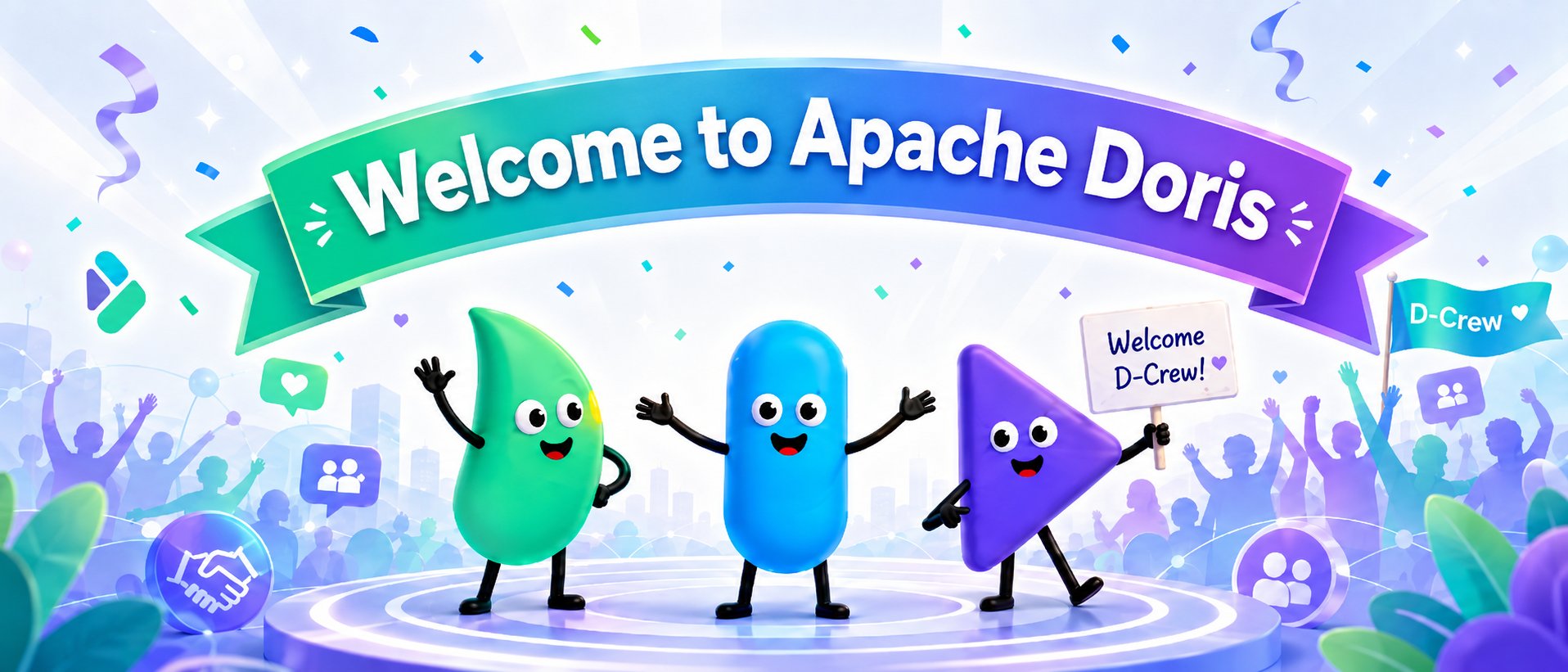
Today, we are excited to introduce three new friends of Apache Doris: the D-Crew.
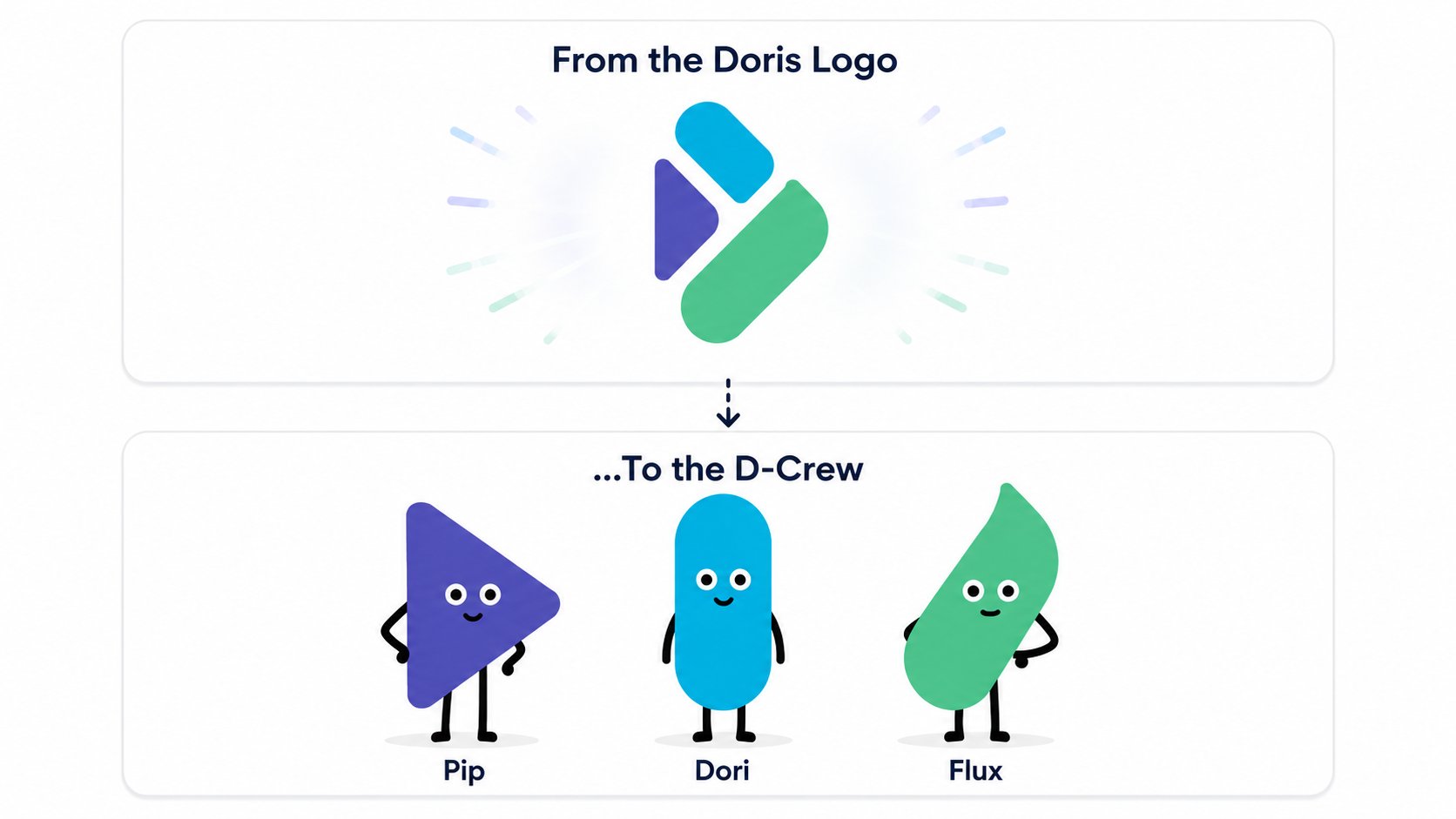
D-Crew is the Apache Doris mascot family, made up of three members: Pip, Dori, and Flux. Each grew out of one of the three geometric elements in the Apache Doris logo. They are three distinct characters, but together they represent the capabilities that make Apache Doris powerful.
Meet the D-Crew
D-Crew offers a lighter, more visual way to get to know Doris, understand how it works, and follow the story of this evolving open source project.
Flux
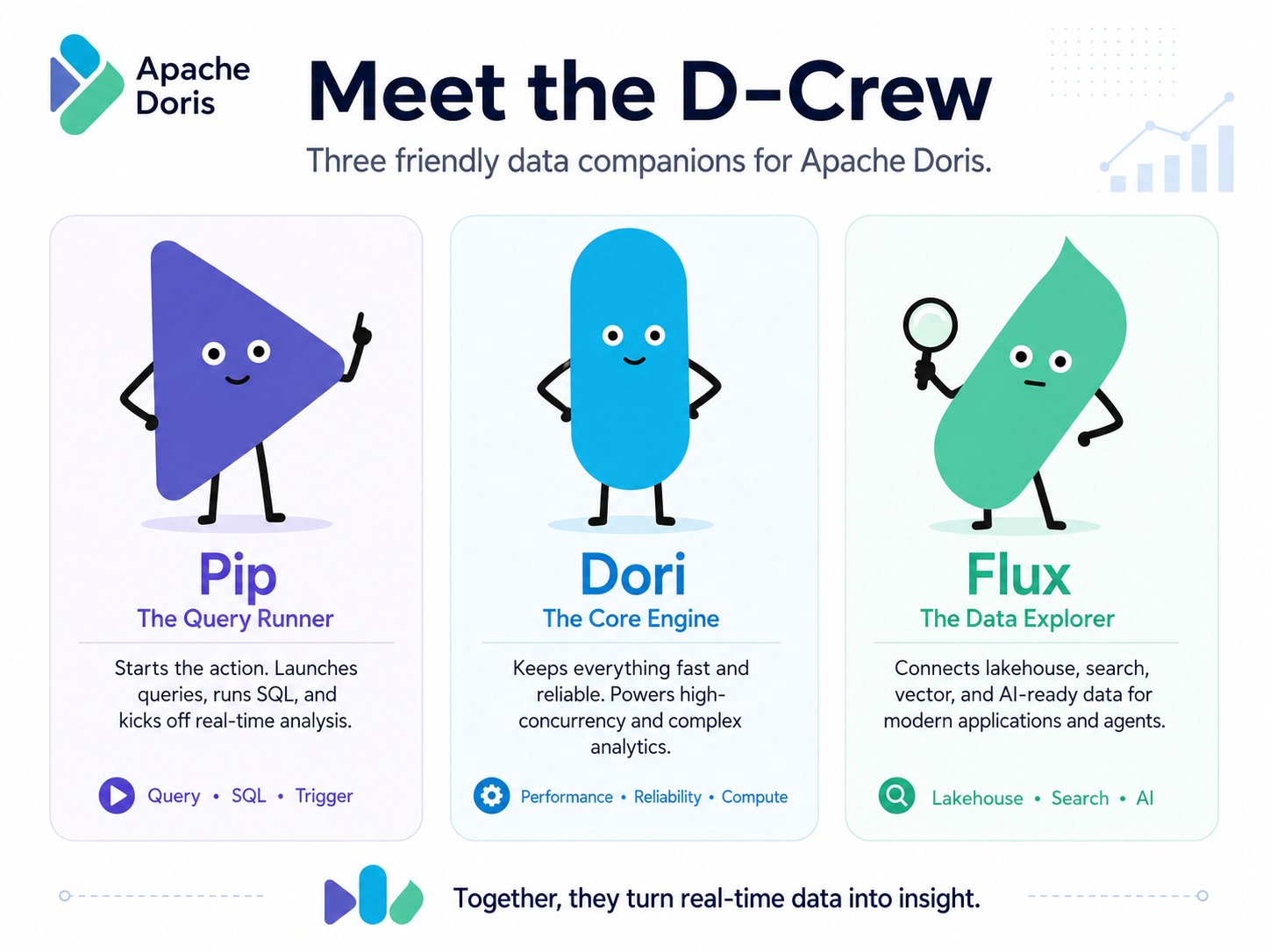
Flux is the streamlined green character and D-Crew's data explorer.
Flux connects different data worlds, including lakehouses, search, vectors, open data formats, and more data modalities to come. Flux makes data discoverable, understandable, and easier to use in different ways. This reflects how Doris is bringing these data capabilities together to provide context and analytics for Agents.
Dori
Dori is the teal capsule and the character closest to the Doris core engine.
Dori is the dependable foundation. Low-latency queries, high-concurrency access, complex analytics, and multi-tenant workloads all rely on Dori's steady support behind the scenes. Dori's reliability represents the continued evolution of Doris as a powerful foundation for data analytics.
Pip
Pip is the purple triangle. It looks like a play button and the starting point of a query.
Starting queries, running SQL, and launching real-time analytics are all Pip's domain. Pip represents the interface between Doris and its users and applications. It starts with the standard SQL interface and extends to capabilities designed for AI Agents, including a semantic layer, CLI, MCP, and Skills.
Explore Apache Doris with D-Crew
Pip, Dori, and Flux are more than three separate characters. Their different roles and the way they work together offer a more intuitive view of how Apache Doris supports a range of use cases.
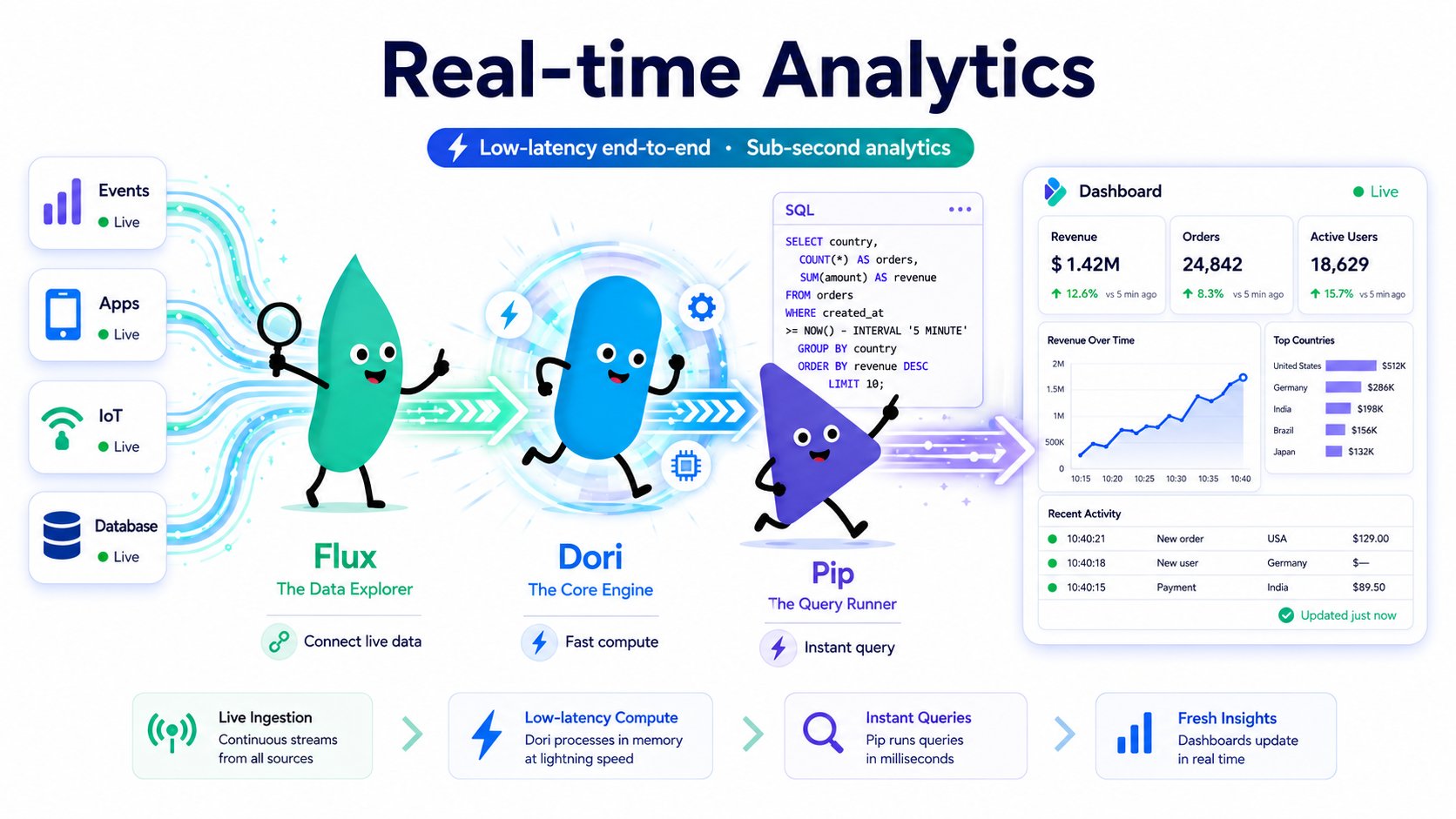
Real-time Analytics
In a Real-time Analytics use case, Flux connects to real-time data, Dori handles high-concurrency and high-throughput data processing and storage, and Pip delivers low-latency query responses. Together, they create an end-to-end, low-latency data analytics pipeline.
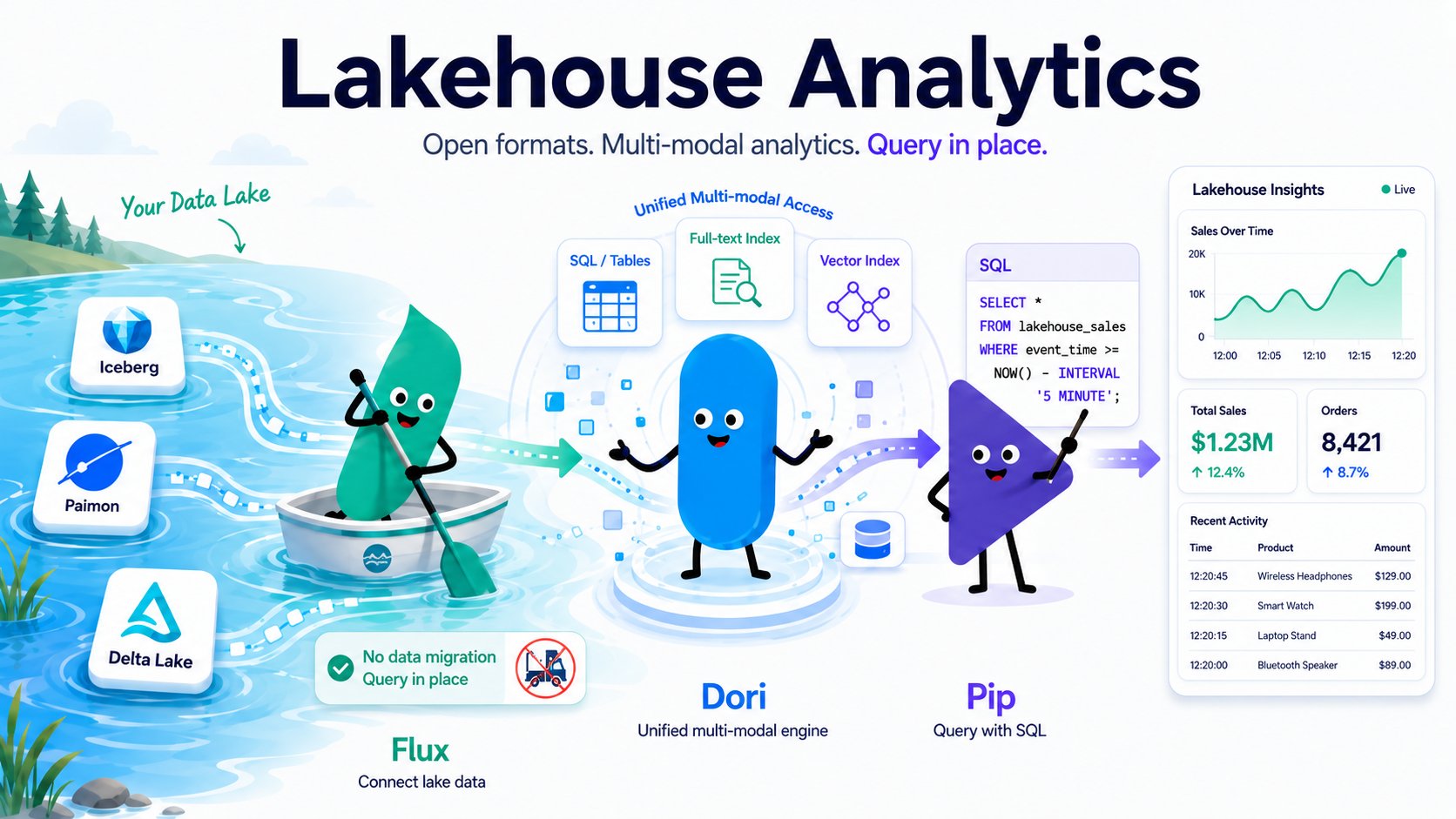
Lakehouse Analytics
In a Lakehouse Analytics use case, Flux connects directly to open data ecosystems such as Iceberg, Paimon, and Delta Lake. Dori efficiently analyzes structured data, text, and vectors through one engine, while Pip presents the resulting hybrid analytics and retrieval results to users.
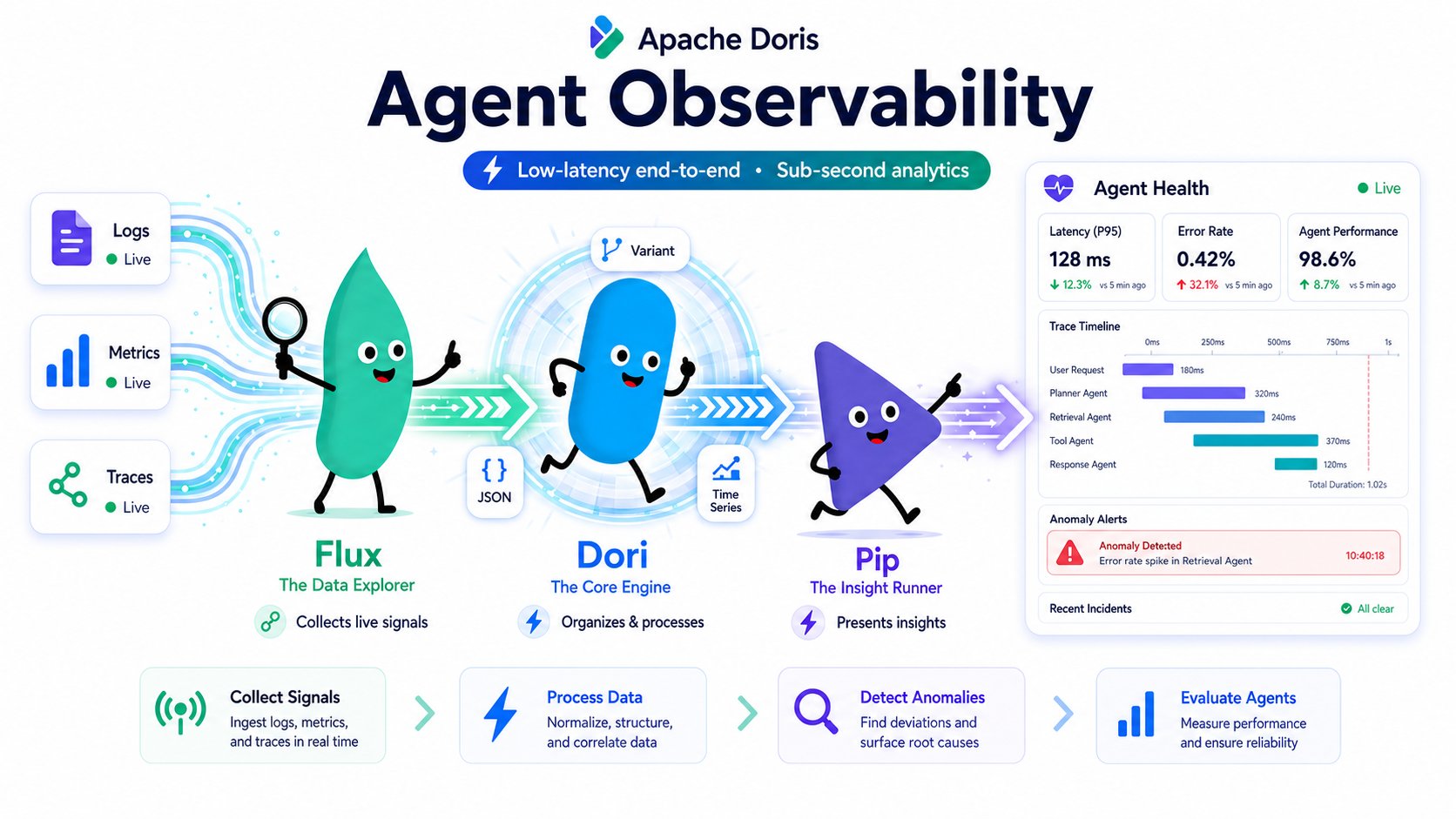
Agent Observability
In an Agent Observability use case, Flux ingests observability data such as Log, Metric, and Trace data. Dori uses Variant and time-series data capabilities to organize and process JSON and time-series data efficiently. Pip presents detected system anomalies and behavioral patterns in real time, helping organizations evaluate Agent performance more efficiently and keep track of system health.
Agentic Data Engine
Apache Doris is evolving into a data analytics system for Agents. In an Agentic Data Engine use case, Flux connects an Agent to real-time, trusted data and finds the context it needs. Pip receives the Agent's query and analytics requests, while Dori handles the computation and processing quickly behind the scenes.
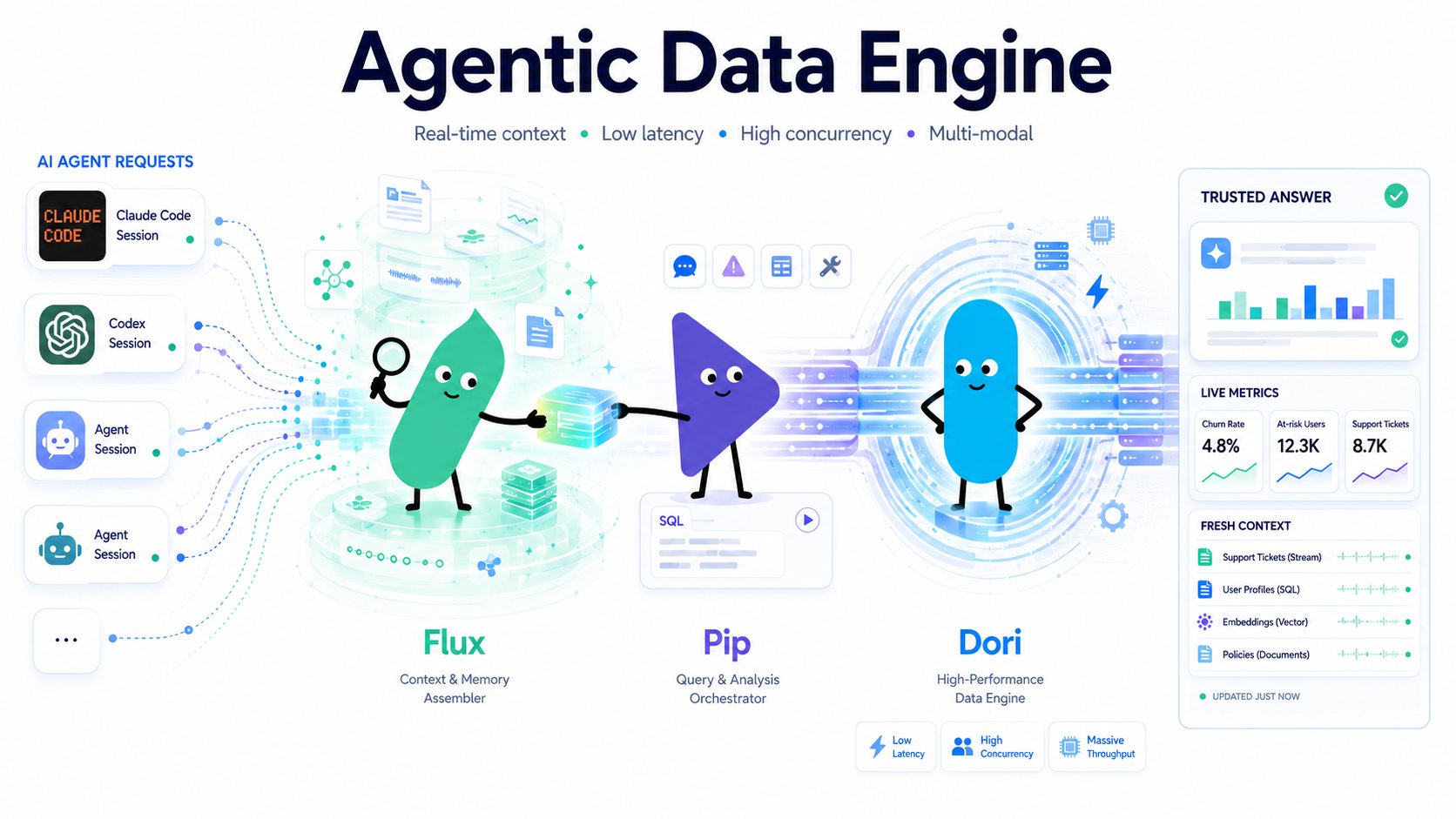
From real-time analytics and lakehouses to hybrid search and Agent-oriented data analytics, the three characters will appear together in different ways. Through these visual stories, we hope to make it easier to understand what Apache Doris can do and how it works with real-world data.
Join the Community
If you see Pip, Dori, and Flux in our documentation, blog posts, Meetups, or on stickers, remember to say hello.
Welcome to the Apache Doris community, D-Crew. And everyone else, you are welcome to join us too.